
01
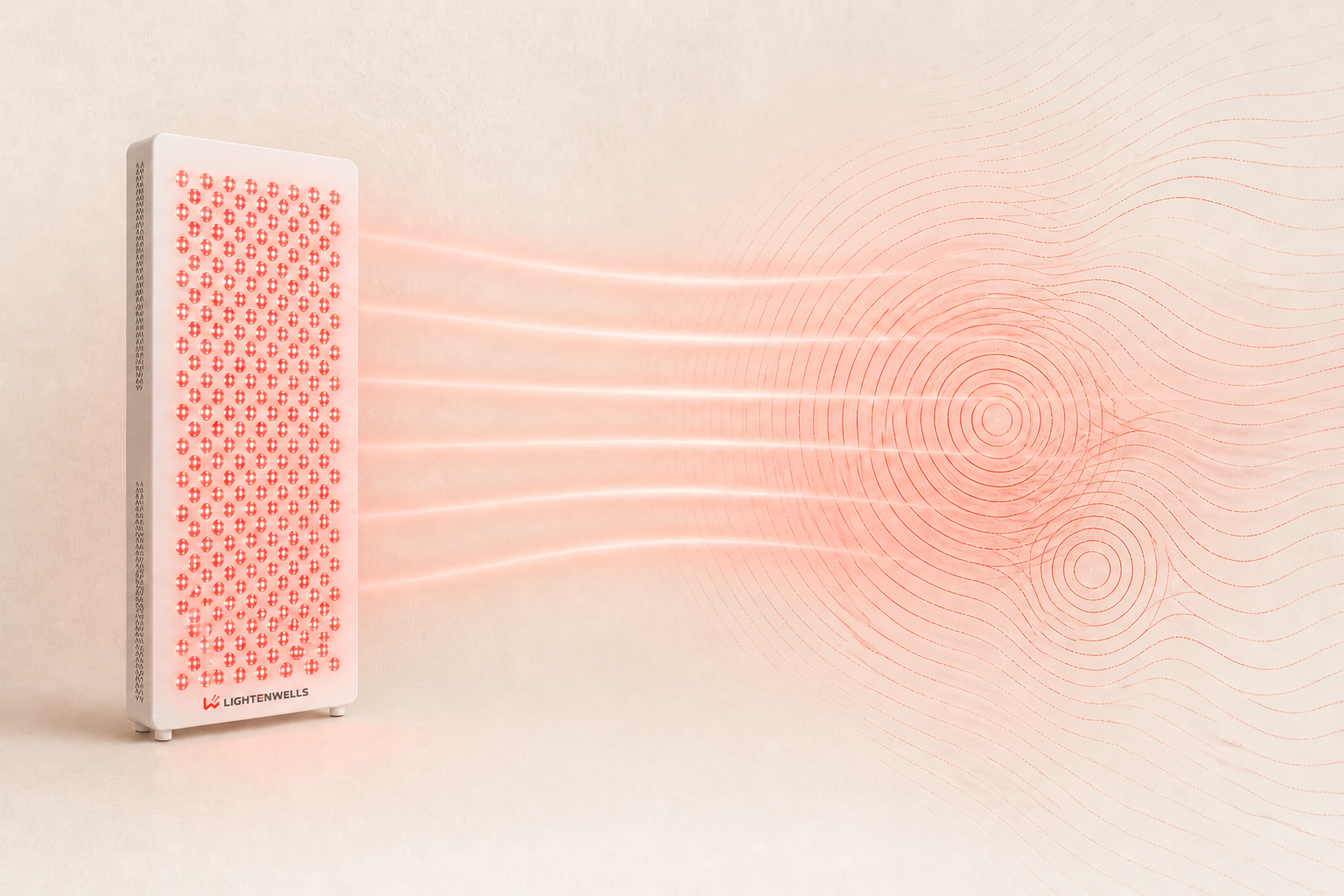
The Device Emits Light
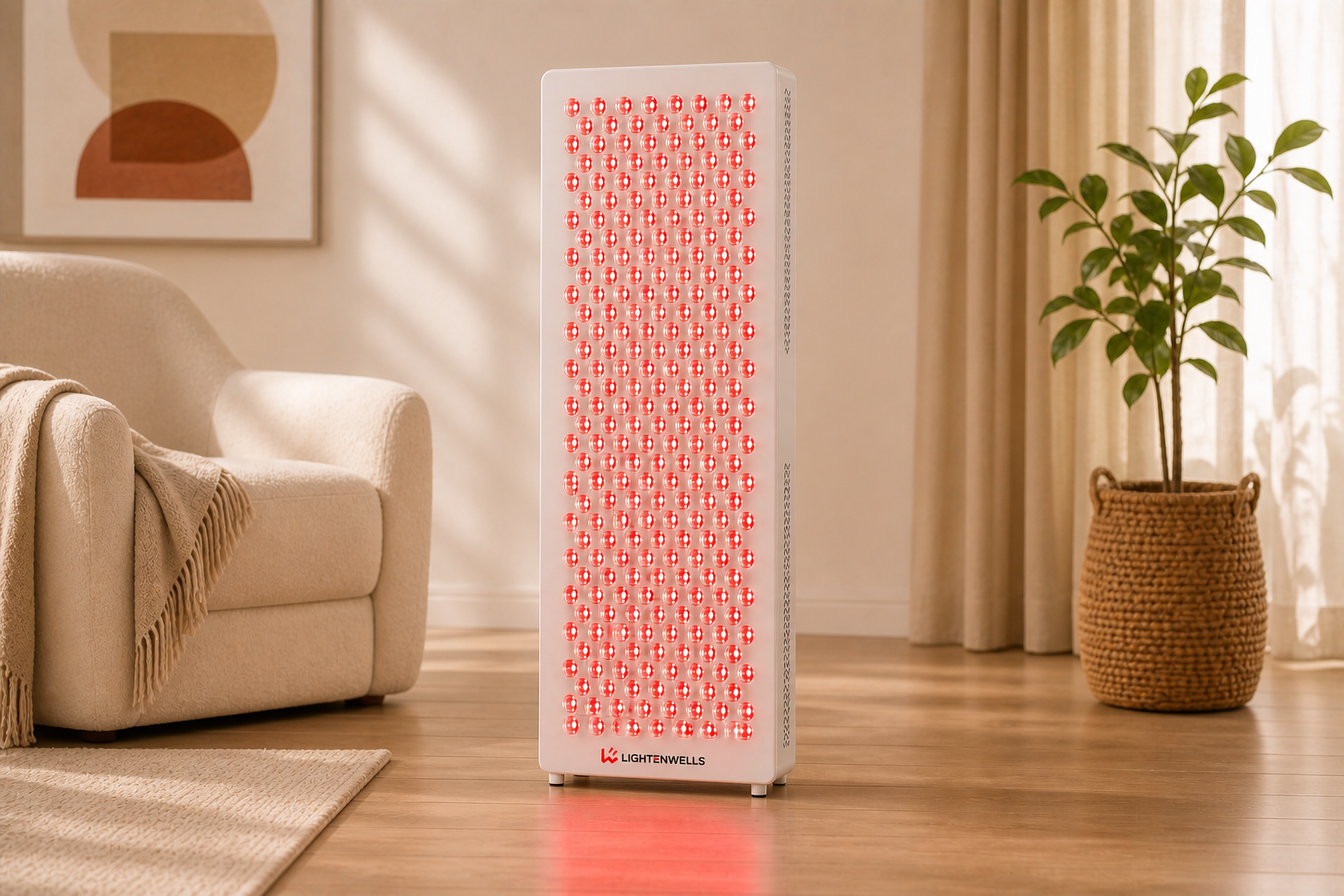
Each model uses a specific array of visible-light and/or near-infrared LEDs. Visible wavelengths may be seen, while near-infrared output is not visible to the eye.
1. LEDs Emit Model-Specific Wavelengths
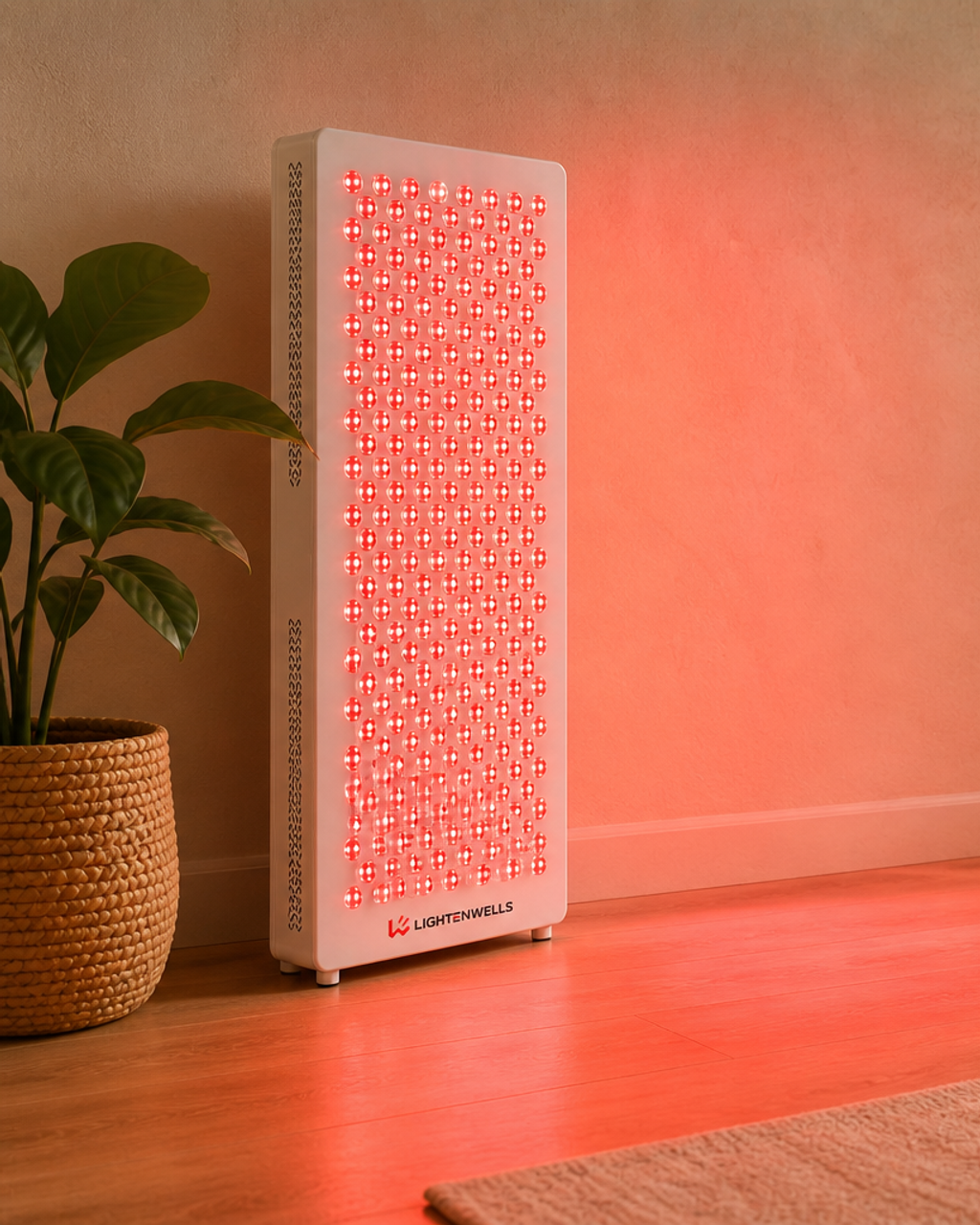
When switched on, each device emits its specified wavelengths, including visible red light and invisible near-infrared light.
2. Light Travels Outward
Light spreads toward the area in front of the device. Distance affects both light intensity and coverage.
3. Distance and Time Affect Exposure
Irradiance is light intensity measured at a specified distance. Closer placement generally increases intensity; greater distance reduces intensity and broadens coverage. Total exposure also depends on session time. Follow your model’s distance and timing instructions.
How the Light Moves
A simple view of what happens after the LED array is switched on.
01
Each model uses a specific array of visible-light and/or near-infrared LEDs. Visible wavelengths may be seen, while near-infrared output is not visible to the eye.
02
Light spreads outward from the LED array toward the area in front of the device. Distance, angle, and positioning affect the intensity and coverage.
03
When light reaches the positioned surface, some is reflected, some is scattered, and some is absorbed. The amount reaching the area depends on the device and its setup.
Wavelengths & Visibility
What you see while the device is operating depends on the wavelengths included with your specific model.
Visible to the Eye
Visible-light output consists of red-light wavelengths. Available wavelengths vary by model.
Not Visible to the Eye
Near-infrared output is not visible to the eye. Some near-infrared LEDs may not appear visibly illuminated while operating.
Four Factors
Light exposure varies with the device and how it is positioned and used. These four factors should be considered together.
Identifies light output in nanometers. Available wavelengths vary by model.
Describes light power reaching a given area at a stated distance, commonly shown in mW/cm².
Describes how long an area is exposed during a session.
Changing distance, angle, or position may change irradiance and coverage.
What to Compare
Specifications differ between models. Review the relevant product page and user manual before choosing or using a device.
Pre-Use Check
Read the instructions for your model.
Place the device on a stable, ventilated surface away from water.
Inspect the unit, cord, plug, and power supply before use. Do not use the device if any part appears damaged.
Getting Started
Use the instructions supplied with your specific model.
01
02
03
04
Session length varies by model and intended use. Follow the timing guidance in your product manual for your device.
Follow the instructions in your product manual. Never look directly into the LEDs. Use protective eyewear when directed.
Do not increase session time, brightness, or frequency beyond the instructions for your specific model. Follow the user manual and discontinue use if you experience discomfort.
loading